
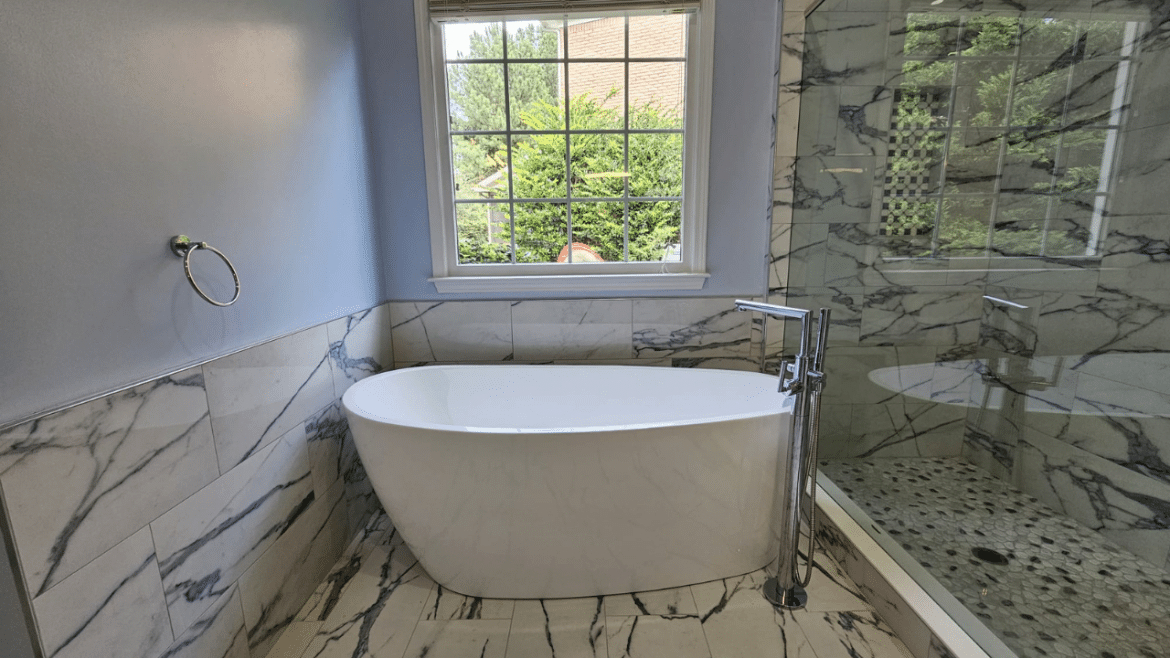
A dated bathtub can make an entire bathroom feel tired. You may want a larger shower, easier entry, better tile, and less cleaning. Those are good reasons to remodel.
Removing the only bathtub, though, deserves a pause before you start demolition.
No universal rule says a house loses a set dollar amount the moment its last tub disappears. An appraiser does not pull out a standard “no bathtub” deduction. But a shower-only home can turn away buyers who need, want, or expect a bathtub. Fewer interested buyers may mean fewer showings, less competition, a longer listing period, or softer offers.
The practical default is simple: keep at least one bathtub when the layout and budget allow it. This matters most in three- and four-bedroom homes, family-oriented neighborhoods, and homes where buyers are likely to have young children.
A well-planned walk-in shower may still be the right choice for you. It may fix a cramped primary bathroom, remove a high tub wall that has become hard to step over, or make daily use far more comfortable.
Your bathroom setup changes the resale risk
A one-bedroom condo and a four-bedroom house should not get the same advice. Bedroom count, bathroom count, neighborhood, price tier, and nearby homes for sale all shape the answer.
Here is a practical way to assess common setups without relying on a nationwide rule.
- One-bath home with one tub: Buyer-pool risk is highest. Families with children and buyers who expect a conventional tub/shower combination may rule the home out early. The safer option is to refresh the existing tub/shower combination or find a way to retain a tub.
- Two or more bathrooms, with another tub remaining: The risk is usually lower. Removing an unused primary-bath tub may make sense if a secondary bathroom still has a functional bathtub. Ask a local agent whether similar homes listed in your area commonly keep one tub.
- Primary bathroom tub removed, secondary tub retained: This is often the strongest compromise. You gain a more useful primary bathroom while keeping a bathing option for children, guests, and pets. Ask whether updated primary suites with walk-in showers are selling well at your home’s price point.
- All-shower condo or townhome: This setup may fit a market with single professionals, couples, or older buyers. It may still limit buyers who have children. Ask an agent to compare active and sold units with a tub against units that have showers only.
- Luxury primary suite with a separate shower and soaking tub: In an upper-tier home, a separate tub may still be expected. Removing it may save space, but the new shower has to feel intentional and high quality. Ask which primary-bath layouts appear in the closest comparable sales.
A local Multiple Listing Service (MLS) search gives you better evidence than generic advice. Have an agent pull active, pending, and recently sold homes with the same approximate bedroom count, bath count, neighborhood, and price range. Look at the photos. A listing description may say “updated bath,” but the photos may show a basic fiberglass shower, weak lighting, or no storage.
Why buyers still care about having at least one bathtub
For households with infants or small children, bathing is easier in a tub. That is a plain utility issue, not a design preference. A family searching for a three-bedroom house may pass on a shower-only home before they ever book a showing.
Pets matter too. Some dog owners prefer a tub for bathing, especially when the alternative is a shower with a glass enclosure and limited floor space. Other buyers simply expect at least one tub in a conventional suburban house. That expectation may not make sense for every household, but it still affects how they shop.
The National Association of REALTORS® regularly discusses buyer preferences in broad market research, but national surveys cannot tell you what buyers in Johns Creek, Alpharetta, Cumming, or a specific Atlanta neighborhood will pay for your exact floor plan. Local listing evidence carries more weight.
There is another buyer group to consider. Buyers planning to age in place may actively prefer a low-threshold shower over a bathtub. A curbless shower removes the step over a tub wall and can make a primary bathroom easier to use as mobility changes. For these buyers, a large shower with a bench, grab-bar blocking installed behind the wall, good lighting, and a hand shower is far more appealing than a deep soaking tub they will never use.
None of these groups is universal. A young family may love a large shower. A downsizer may insist on a soaking tub. The point is buyer-pool flexibility. Retaining one tub leaves more doors open.
When a walk-in shower can improve buyer appeal
A walk-in shower can make a primary bathroom feel better and sell better when it solves an obvious problem. A large, unused garden tub that crowds the room is a common example. So is a dated primary bathroom with a tiny separate shower that nobody enjoys using.
The difference between a premium shower renovation and a simple tub removal is easy to see in listing photos and during a showing.
A good shower conversion needs sound work behind the finished tile, including:
- A properly installed waterproofing membrane
- Correct slope and drainage at the shower floor
- Ventilation that can handle regular shower use
- Tile installed with consistent cuts and clean grout lines
- A glass shower enclosure that fits the room
- Recessed niches, shelves, or other useful storage
- Lighting that does not leave the shower dark
Cheap work can hurt more than keeping an old tub. A buyer who sees cracked tile, a poorly aligned drain, a shower door that barely clears the vanity, or signs of moisture will wonder what they cannot see.
Here is how common layouts tend to read to buyers:
Curbless shower
A curbless shower has a level or nearly level entry. It works well for aging in place and can make a small primary bathroom feel more open. It requires careful floor planning, drainage, and waterproofing. It is not a shortcut project.
Standard walk-in shower
A standard walk-in shower has a low curb and a glass door or fixed glass panel. It suits many primary bathrooms and can be a major improvement over an awkward tub. Its resale position is stronger when another bathroom retains a tub.
Tub/shower combination
A tub/shower combination is the most flexible choice for a secondary bathroom. It meets many families’ needs while using modest floor space. It does not have to look dated. Thoughtful tile, a quality shower valve, proper lighting, and a useful vanity can make it feel current.
Separate tub and shower
This layout works best where the bathroom has enough room, and the home’s price point supports it. In some luxury primary suites, buyers expect both. Cramming both fixtures into a tight room creates the opposite effect, so don’t force this plan where it doesn’t fit.
For a broader fixture-by-fixture budget discussion, see bathroom remodeling costs.
Appraisal and buyer appeal are different issues
Homeowners often treat appraised value and market response as the same thing. They are related, but they are not the same.
An appraiser develops an opinion of value using comparable sales, property condition, features, size, location, and utility. The Uniform Standards of Professional Appraisal Practice (USPAP) governs appraisal practice, but it does not set a universal bathtub adjustment. A missing tub is not automatically a line-item deduction.
An updated bathroom can support a stronger condition rating or make a home compare more favorably with dated properties. But if the best comparable sales all retain a tub, and buyers consistently favor those homes, the market reaction may still influence value.
The indirect path is usually the more realistic concern. A shower-only home may draw fewer showings. With fewer interested parties, you have less chance of multiple offers. That can affect the final sale price without appearing as a separate “bathtub deduction” on an appraisal report.
Conversion cost versus possible resale return
A tub-to-shower conversion has many moving parts. Costs change with plumbing relocation, demolition, tile selection, subfloor repairs, glass, accessibility features, ventilation work, permits, and hidden water damage.
Do not start with an assumed return at sale. A remodel rarely pays back the same way in every home. Quality and fit matter more than chasing a fixed percentage.
Consider these three paths.
Refresh the existing tub/shower
If the existing layout is functional, you may replace worn tile, fixtures, lighting, vanity surfaces, and hardware while retaining the tub. This is usually the conservative option for a home with only one bathroom or only one tub.
Convert a secondary tub while retaining another tub
This is a sensible choice when one bath is rarely used as a tub and a different bathroom keeps a functional tub/shower combination. It gives you a chance to create a better guest bath or primary bath without closing the door on family buyers.
Remove the only tub for a premium walk-in shower
This path makes sense when the shower substantially improves daily bathroom use and local buyer evidence supports the choice. It is the highest resale-risk option because you are trading buyer flexibility for a better experience in one room.
The project should match the home. An expensive glass enclosure and specialty tile may feel out of place in an entry-level home, while a low-cost insert shower can feel weak in an otherwise upgraded property.
For a larger discussion of remodeling return and project planning, review ROI of home remodeling projects. If financing is part of the plan, home remodeling financing is also worth reviewing before finalizing the scope.
Questions to answer before removing the only tub
A contractor can tell you what fits. A local agent can tell you what nearby buyers are seeing. You need both conversations before finalizing the plan.
Ask a local real-estate agent:
- Who buys homes like mine right now?
- Do the most relevant comparable listings retain at least one tub?
- How many competing homes have updated walk-in showers?
- Does this neighborhood draw young families, downsizers, or a mix of both?
- Are shower-only homes taking longer to sell or receiving different buyer feedback?
Ask your remodeling contractor:
- Can we retain a tub in another bathroom without creating an awkward layout?
- Does the plan require plumbing relocation or structural floor work?
- What waterproofing system will be installed behind the shower tile?
- Are permits required for this scope?
- What are the cost differences between refreshing the tub and converting it?
Keep your paperwork. Save permits, manufacturer warranties, product information, waterproofing documentation, and before-and-after photos. Buyers may never ask for every document, but a complete file gives them more confidence in a remodeled bathroom.
The safest resale choice is usually to keep one tub
Keeping one bathtub generally protects your buyer pool. In a family-oriented, multi-bedroom home, removing the sole tub is usually a poor resale gamble.
A walk-in shower can still be an excellent choice. It makes sense when another bathroom retains a tub, the primary bathroom needs better accessibility, or local comparables show strong demand for updated, shower-focused suites.
Frequently asked questions
Does removing the only bathtub reduce home value?
Not automatically. There is no universal dollar deduction for removing a tub. But a shower-only home may appeal to fewer family buyers and buyers who expect at least one tub. That can affect demand, offers, or days on market.
Do real estate agents recommend keeping one bathtub for resale?
Often, yes, especially in multi-bedroom homes and family-oriented neighborhoods. Keeping one functional tub preserves flexibility while letting a primary bathroom or secondary bath get a walk-in shower.
Will an appraiser lower a home’s value if it has no bathtub?
Not necessarily. An appraiser reviews local comparable sales, condition, utility, and market reaction. No standard deduction applies solely because a bathtub is absent. Buyer appeal can still suffer even when an appraisal shows no separate line-item adjustment.
Is a walk-in shower better than a bathtub for resale?
A walk-in shower may be more attractive in an updated primary suite or for accessibility-minded buyers. It is usually the safer move when another bathtub remains elsewhere in the home. Local buyer demographics and comparable listings should guide the final choice.
Should I convert a tub to a shower before selling?
Convert it only if the new shower clearly improves the bathroom and fits nearby buyer expectations. Before removing the only tub, ask a local agent to review competing and recently sold homes with similar bedroom counts, bathroom counts, locations, and price points.
Before you commit, review comparable listings with an agent and have a remodeling professional assess the layout, plumbing, ventilation, and waterproofing requirements. A.I.R. Kitchen & Bath Center works with homeowners on full interior remodeling projects in Johns Creek, Alpharetta, Cumming, and nearby metro Atlanta communities. Contact the team to schedule a consultation and discuss a bathroom plan that fits your home and your future sale goals.

Leave a reply